
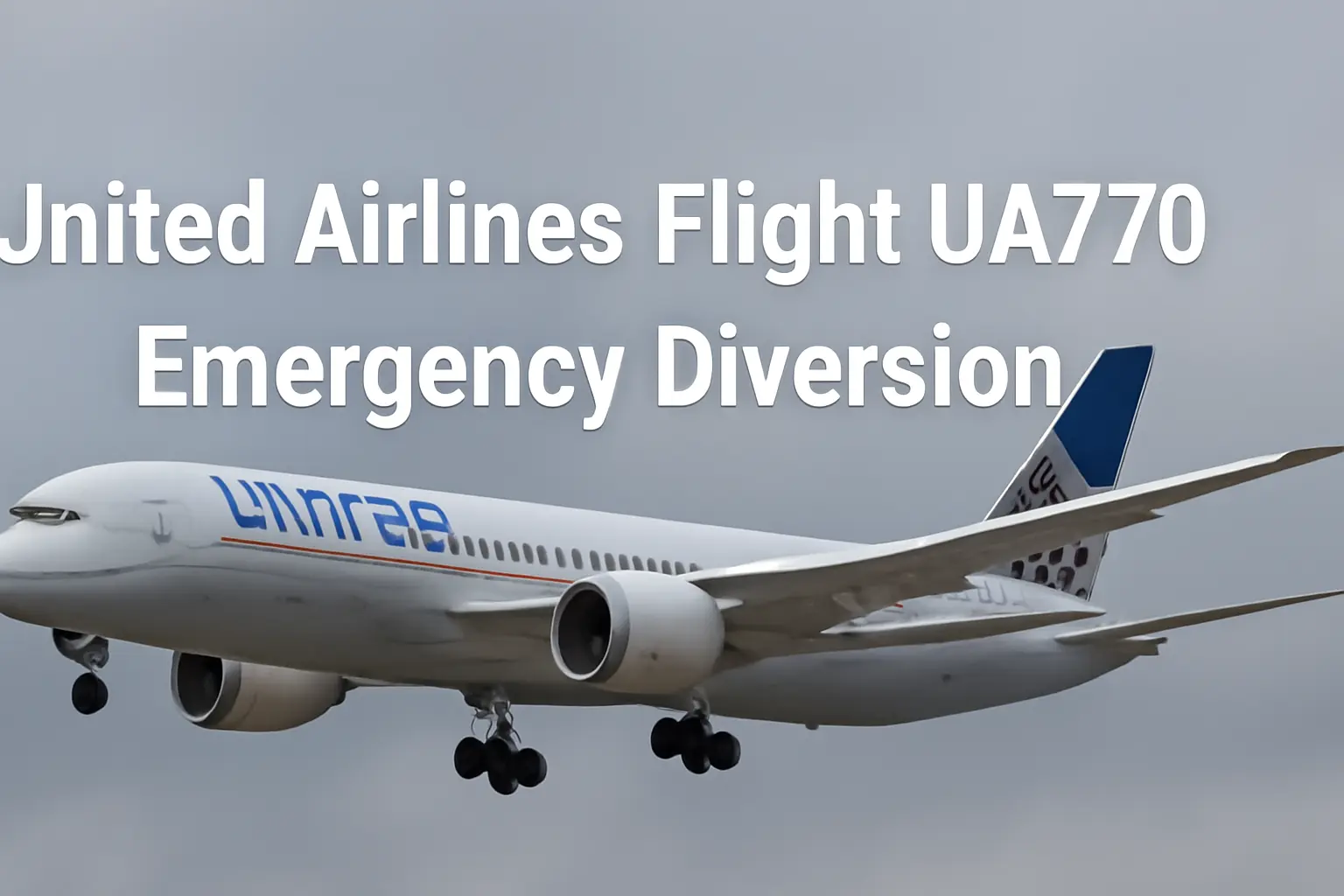
United Airlines Flight UA770 drew worldwide attention when it declared an emergency mid-flight and diverted to London Heathrow. Although such events can seem alarming, they demonstrate aviation safety in action. This article explains the United Airlines Flight UA770 emergency diversion, the causes behind it, how the crew responded, and the passenger experience. By reviewing the timeline, technical insights, and expert commentary, readers gain a clear understanding of how modern aircraft systems and trained crews prioritize safety.
Overview of United Airlines Flight UA770
United Airlines Flight UA770 operated a long-haul route using a Boeing 787, an aircraft known for advanced monitoring and safety systems. During cruising altitude, the crew noticed a minor anomaly in the pressurisation system. While there was no immediate danger, standard aviation protocols required a precautionary diversion.
Key points:
-
Flight origin and destination
-
Aircraft model: Boeing 787
-
Detection of a technical alert
-
Coordination with air traffic control (ATC)
Timeline of the Emergency Diversion
A structured timeline illustrates how the event unfolded:
-
Normal cruise phase: Flight maintained standard altitude and speed.
-
System alert: Instruments indicated a potential pressurization irregularity.
-
Squawk 7700 activated: Crew signaled a general emergency to ATC.
-
Decision to divert: Pilots selected the safest alternate airport.
-
Controlled descent and landing: The aircraft safely landed at London Heathrow.
This sequence reflects how aviation relies on early detection and decisive action rather than waiting for an escalation.
What Caused the United Airlines Flight UA770 Emergency Diversion?
Cabin Pressurization System Anomaly Explained
The cabin pressurization system maintains safe and comfortable air pressure at high altitudes. In UA770, sensors indicated irregular readings, though no immediate danger existed. Even minor anomalies can justify diversion because aviation prioritizes prevention over risk.
Understanding the Squawk 7700 Emergency Code
Squawk 7700 is a transponder code signaling a general emergency. It alerts controllers to prioritize the aircraft, clear surrounding traffic, and coordinate emergency services. Its use demonstrates caution and proper protocol, not imminent danger.
Why Oxygen Masks Were Not Deployed
Oxygen masks deploy only when cabin pressure exceeds safety limits. In this case, pressure remained within acceptable thresholds. Passengers were safe, and the precautionary diversion prevented any potential escalation.
Emergency Diversion and Landing at London Heathrow
Why London Heathrow Was Selected
Heathrow was ideal due to its long runways, emergency readiness, and advanced air traffic control. Proximity to the flight path and the airport’s ability to handle large aircraft ensured a safe landing.
Emergency Safety Procedures on Arrival
-
Fire and rescue teams were positioned as a precaution.
-
The aircraft taxied normally to a designated stand.
-
Passengers were guided calmly and safely to disembark.
Runway and Landing Details
Controllers coordinated a priority landing sequence, ensuring a smooth descent and safe touchdown. This demonstrates the importance of structured communication during emergency diversions.
Crew Response and Passenger Experience
Flight Crew Training and Decision-Making
Pilots undergo extensive simulator training for emergencies like pressurization faults and diversions. Crew resource management ensures timely, data-driven decisions rather than reactive measures.
Passenger Reactions and Cabin Safety Measures
Cabin crew provided clear communication, keeping passengers calm and informed. The smooth handling of the situation highlights the effectiveness of training and transparency.
Post-Landing Actions and Aircraft Inspection
Ground Operations and Initial Checks
Engineers performed visual inspections and reviewed aircraft data immediately after landing. Early checks help determine if further investigation is necessary before returning the aircraft to service.
Aircraft Grounded for Detailed Engineering Review
The Boeing 787 was grounded to allow thorough diagnostics. Grounding is standard for precautionary diversions and ensures compliance with aviation safety regulations.
Pressurization System Maintenance Investigation
Maintenance teams examined valves, sensors, and software logs. Even minor anomalies are reviewed to refine safety protocols and prevent future incidents.
Aviation Expert Insights on Emergency Diversions
How Airlines Prepare for In-Flight Emergencies
Airlines conduct simulator drills and maintain operational manuals for emergency situations. Regular training ensures crews respond instinctively to unexpected events.
Role of Aircraft Technology in Preventing Crises
Modern aircraft use predictive maintenance systems to detect anomalies early. Pilots and engineers can act promptly, preventing small issues from escalating.
Reliability of the Boeing 787
The Boeing 787 has a strong safety record. Incidents like UA770 highlight system effectiveness, reassuring passengers about modern aircraft reliability.
What Is an Emergency Diversion in Aviation?
Common Reasons Flights Declare Emergencies
-
Technical alerts, such as pressurization issues
-
Medical emergencies onboard
-
Severe weather or operational hazards
How Emergency Diversions Protect Passenger Safety
Diverting early minimizes risk and ensures passengers land safely, prioritizing safety over schedule or convenience.
Impact on Passengers
Travel Delays, Rebooking, and Support
Passengers experienced delays but received prompt assistance, including rebooking and accommodations. Efficient support demonstrates the airline’s commitment to passenger care.
Airline Communication With Media and Families
Clear updates maintained trust, ensuring accurate information reached passengers and their families without unnecessary alarm.
Lessons Learned From United Airlines Flight UA770 Emergency Diversion
-
Early detection and diversion prevented potential risk
-
Crew professionalism and adherence to protocols ensured safety
-
Passengers benefited from transparent communication and structured support
Conclusion
The United Airlines Flight UA770 emergency diversion demonstrates how aviation safety relies on early detection, trained crews, and strict protocols. From identifying a pressurisation anomaly to landing safely at London Heathrow, every step reflected a focus on passenger safety and risk prevention. Clear crew communication kept passengers calm, while post-landing inspections ensured the aircraft remained airworthy. This incident highlights the importance of technology, training, and precautionary measures in modern aviation. Emergency diversions, though concerning, are designed to protect lives and maintain confidence in air travel. Staying informed helps passengers understand these safety decisions.
Frequently Asked Questions
What caused United Airlines Flight UA770 to divert?
A pressurization system anomaly triggered a precautionary diversion to ensure passenger safety.
Why was Heathrow Airport chosen for the diversion?
Heathrow offered long runways, emergency services, and proximity to the flight path.
Did passengers use oxygen masks during the emergency?
No; cabin pressure remained within safe limits, so masks were not needed.
How did the crew handle the emergency?
The trained crew followed strict protocols, communicated clearly, and coordinated with air traffic control.
What lessons were learned from the UA770 diversion?
Early detection, crew professionalism, and precautionary protocols prevented risks and ensured a safe landing.