
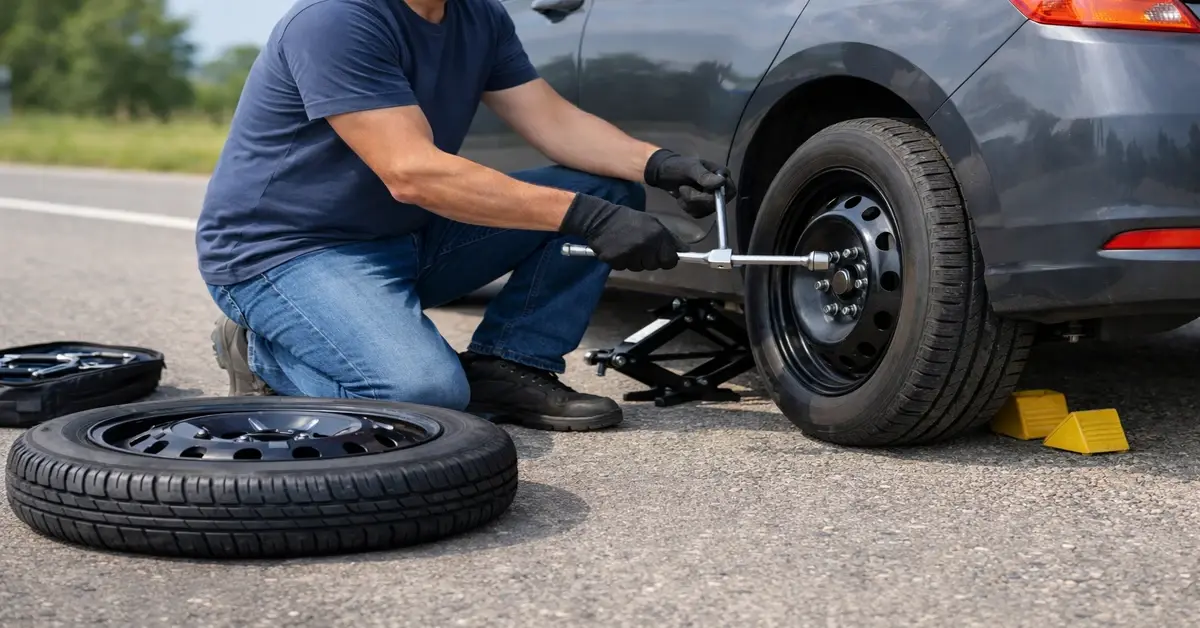
Introduction:
A flat tire often strikes without warning on a busy road, during bad weather, or when you’re already running late. In those moments, stress can take over. However, knowing the correct steps ahead of time can turn a frustrating situation into a manageable one. This guide explains how to change a tire safely and calmly, even if you have no prior experience. You’ll learn what tools matter, how to stay safe, and what to do after the spare is installed so you can continue your journey with confidence.
Before You Start: Prepare to Change a Tire Safely
Tools You Need
Before stopping, confirm your vehicle has these essentials. Most are stored near the spare tire.
Essential tools
-
Spare tire (full-size or temporary)
-
Car jack (scissor or bottle jack)
-
Lug wrench or tire iron
Recommended safety items
-
Wheel chocks or a sturdy wedge
-
Flashlight or headlamp
-
Gloves for grip
-
Reflective vest or warning triangle
Tip: Checking your kit at home prevents surprises during emergencies.
Safety Checks Before Lifting the Car
Safety always comes first. Therefore, take a moment to prepare the area.
-
Pull over to a flat, stable surface
-
Turn on hazard lights immediately
-
Engage the parking brake
-
Keep passengers away from traffic
-
Avoid hills, curves, or soft ground
If conditions feel unsafe—such as heavy traffic or poor visibility—calling roadside assistance may be the better option.
Step-by-Step: How to Change a Tire Correctly
Step 1: Secure the Vehicle
Start by stabilising the car to prevent movement.
-
Park away from traffic if possible
-
Activate hazard lights
-
Set the parking brake
-
Place wheel chocks behind the opposite tire
These steps reduce risk and give you space to work safely.
Step 2: Locate the Spare Tire and Tools
Open the trunk and remove the spare, jack, and lug wrench. Many drivers skip this check until it’s too late. Practicing once at home makes roadside repairs easier and faster.
Step 3: Remove the Hubcap (If Needed)
If your wheel has a hubcap, gently pry it off using the flat end of the lug wrench. Set it aside where it won’t roll away.
Step 4: Loosen the Lug Nuts First
Before lifting the vehicle, slightly loosen the lug nuts.
-
Turn the wrench counterclockwise
-
Use steady pressure
-
Loosen each nut about half a turn
If lug nuts are stuck, apply controlled force. Avoid jerking the wrench, as sudden slips can cause injury.
Step 5: Position the Jack at the Correct Jack Point
Proper jack placement is critical.
-
Locate reinforced jack points near the wheel
-
Check the owner’s manual if unsure
-
Keep the jack base flat on solid ground
Incorrect placement can damage the vehicle or cause the jack to slip.
Step 6: Lift the Vehicle
Slowly raise the jack until the tire clears the ground by a few inches. Pause and check stability. If the car feels unsteady, lower it and reposition the jack.
Never place hands or legs under the vehicle while it is supported only by a jack.
Step 7: Remove the Flat Tire
Fully remove the lug nuts and place them somewhere safe. Pull the tire straight toward you. If it sticks, a gentle rocking motion can help.
Step 8: Mount the Spare Tire
Align the spare with the wheel studs and slide it into place. Hand-tighten the lug nuts first to prevent cross-threading. This step protects both the wheel and studs.
Step 9: Lower the Car and Tighten Lug Nuts
Lower the vehicle until the tire touches the ground. Then tighten the lug nuts in a star pattern to seat the wheel evenly. After fully lowering the car, tighten once more.
If available, use a torque wrench for accuracy.
After You Finish: Important Next Steps
Check Tire Pressure
Temporary spares often lose air while stored. Therefore, check pressure as soon as possible and inflate to the recommended level.
Understand Spare Tire Limits
Most temporary spares are designed for short distances.
| Spare Type | Max Speed | Typical Distance |
|---|---|---|
| Donut spare | ~50 mph | ~50 miles |
| Full-size spare | Normal | Until repaired |
Driving beyond limits can damage the tire and affect handling.
Recheck Lug Nuts
After driving a short distance, stop safely and confirm the lug nuts remain tight. This step adds an extra layer of safety.
Common Mistakes to Avoid
Many issues happen due to rushing. Avoid these common errors:
-
Stopping in unsafe locations
-
Forgetting hazard lights or parking brake
-
Jacking in the wrong spot
-
Tightening lug nuts unevenly
-
Ignoring spare tire limits
Taking an extra minute can prevent serious problems.
Special Situations: When Conditions Are Challenging
Changing a Tire on a Highway
If you’re on a narrow shoulder, prioritise safety. Stay alert, use hazard lights, and move away from traffic if possible. In high-risk situations, professional help is often safer.
Changing a Tire in Rain or Darkness
Visibility matters. Use a flashlight early, wear reflective gear, and watch your footing. Wet or soft ground can reduce jack stability.
Vehicles Without a Spare Tire
Some cars use sealant kits or run-flat tyres. These allow limited driving but require professional inspection soon after use.
Conclusion:
A flat tire doesn’t have to ruin your day. When you understand how to change a tire, you gain confidence, independence, and peace of mind on the road. By following the correct steps prioritising safety, using the right tools, and tightening everything properly—you reduce risk and handle the situation calmly. Most importantly, preparation makes all the difference. Take a few minutes to check your spare tire, jack, and lug wrench before you need them. Bookmark this guide, practise once at home, and stay ready so you can get back on the road safely whenever the unexpected happens.
Frequently Asked Questions
1. How long does it take to change a tire?
It usually takes 15–30 minutes for beginners when done safely and calmly.
2. Is it safe to change a tire on the highway?
Only if you can park safely; otherwise, roadside assistance is the safer option.
3. What tools do I need to change a tire?
You need a spare tire, jack, and lug wrench; safety gear is recommended.
4. How far can you drive on a spare tire?
Most temporary spares are safe for up to 50 miles at speeds under 50 mph.
5. Why should lug nuts be tightened in a star pattern?
A star pattern ensures even pressure and proper wheel alignment, reducing vibration.
You Might Also Like It: Veneajelu