
Introduction:
Running a retail store today means managing sales, inventory, staff, and customers often all at once. However, many store owners still rely on manual processes or disconnected tools. As a result, they lose time, miss sales, and struggle with stock accuracy.
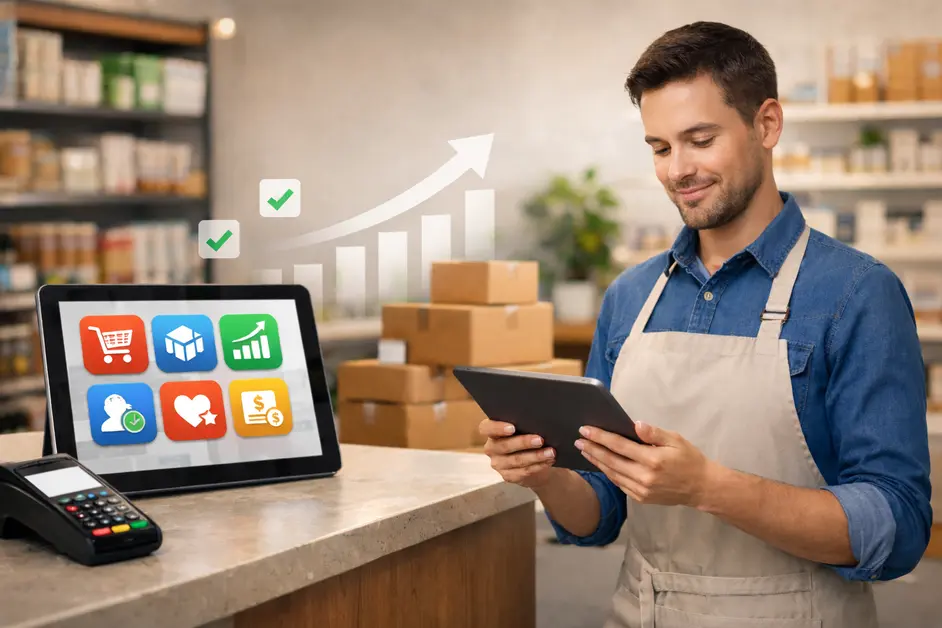
The right apps for stores solve these problems by automating daily tasks, improving visibility, and reducing errors. Instead of juggling systems, store owners gain a clear view of sales, stock levels, and customer behaviour. This guide explains which apps matter most, how they save time, and how they help stores grow without adding complexity.
How Apps for Stores Boost Sales and Save Time
Every delay in retail costs money. For example, slow checkout frustrates customers, while poor inventory data leads to stockouts. Apps for stores fix these issues by streamlining operations and improving decision-making.
Here’s how they make a real impact:
-
Faster checkout: Reduces queues and abandoned purchases.
-
Accurate inventory: Prevents lost sales and excess stock.
-
Real-time data: Helps owners spot trends and adjust quickly.
-
Better retention: Loyalty tools encourage repeat purchases.
In addition, automation lowers mental load. Instead of guessing, store owners rely on clear dashboards and reports. Over time, these small gains compound into higher profits and smoother operations.
Essential Categories of Apps for Stores
Most retailers need a core set of tools. While you don’t need everything at once, these categories form a strong foundation.
POS Apps for Stores: Faster Checkout and Better Tracking
A POS system does more than process payments. It records every sale, tracks products, and supports reporting. Therefore, it becomes the backbone of daily operations.
Key features to look for:
-
Quick checkout with multiple payment options
-
Barcode scanning and receipt printing
-
Offline selling with automatic syncing
-
Sales reports by product, category, and staff
Why it matters: Faster checkout improves customer experience and increases completed sales, especially during busy hours.
Inventory Management Apps for Stores: Avoid Stock Problems
Inventory errors are expensive. Overstock ties up cash, while stockouts lose customers. Inventory apps reduce both risks.
Important features include:
-
Real-time stock updates
-
Barcode-based stock counts
-
Low-stock alerts and reorder points
-
Supplier and purchase order tracking
Simple best practice: Start with accurate SKUs, set reorder points for top sellers, and perform weekly cycle counts. This approach keeps inventory clean without daily full counts.
Customer Loyalty Apps for Stores: Drive Repeat Sales
Acquiring new customers costs more than keeping existing ones. Loyalty apps help stores build long-term relationships.
What strong loyalty apps offer:
-
Points or tier-based rewards
-
Digital loyalty cards or QR codes
-
Personalized offers and reminders
-
SMS, email, or push notifications
For example, a simple “earn points every purchase” program often outperforms complex reward systems. Consistency matters more than variety.
Accounting Apps for Stores: Save Time on Bookkeeping
When sales and expenses live in separate systems, bookkeeping becomes stressful. Accounting apps bring everything together.
Look for tools that provide:
-
Automatic POS and bank imports
-
Expense and receipt tracking
-
Profit and loss reports
-
Tax-ready summaries
As a result, store owners spend less time on spreadsheets and more time running the business.
Staff Scheduling Apps for Stores: Smarter Workforce Control
Staffing problems lead to poor service and rising costs. Scheduling apps help match labour to demand.
Core features include:
-
Shift planning and availability tracking
-
Time clocks and payroll exports
-
Multi-location scheduling
-
Labor cost reports
When used correctly, these tools improve service while controlling overtime.
Delivery and Logistics Apps for Stores: Reliable Local Fulfillment
For stores offering local delivery, reliability is critical. Delivery apps help manage routes and communication.
Useful features include:
-
Route optimization
-
Customer delivery notifications
-
Proof of delivery
-
Delivery fee and zone management
This category is especially valuable for grocery, pharmacy, and convenience stores.
Best Apps for Stores by Store Type
Not all stores have the same needs. Therefore, choosing apps by store type leads to better results.
Clothing and Boutique Stores
-
POS with size and color variants
-
Inventory tools for returns and transfers
-
Loyalty apps for repeat buyers
Grocery and Convenience Stores
-
Fast POS with barcode scanning
-
Inventory apps with reorder alerts
-
Delivery tools for local orders
Multi-Location Stores
-
Centralized inventory visibility
-
Role-based staff access
-
Unified sales dashboards
How to Choose the Right Apps for Stores
Choosing the wrong tools wastes time and money. Use this checklist to avoid common mistakes.
Step 1: Define Your Core Needs
Ask yourself:
-
How many daily transactions do you process?
-
Do you need offline mode?
-
How many SKUs do you manage?
-
Do you sell online and in-store?
Step 2: Evaluate These Key Factors
-
Checkout speed
-
Inventory accuracy
-
Integration with other tools
-
Ease of staff training
-
Reporting quality
-
Customer support
-
Scalability
-
Data security
In addition, choose providers that follow basic payment security standards to protect customer data.
Common Mistakes to Avoid
Many stores fail to see results because they:
-
Buy too many apps too early
-
Use tools that don’t integrate
-
Skip staff training
-
Ignore offline needs
-
Fail to track performance metrics
Avoiding these mistakes improves ROI and staff adoption.
Frequently Asked Questions
What are the best apps for stores to start with?
Start with a POS and inventory system that integrates well and supports barcode scanning.
Can these apps work offline?
Many POS tools offer offline selling, but features vary. Always test this before committing.
Are free tools reliable?
Some are, but free plans often limit reporting or integrations.
Do loyalty apps really work?
Yes. Research shows loyalty programmes improve repeat purchases and customer retention.
Conclusion:
Running a successful store today depends on choosing tools that simplify work, not add complexity. The right apps for stores help you speed up checkout, keep inventory accurate, manage staff efficiently, and build lasting customer relationships. Instead of trying to adopt every tool at once, focus on solving one problem at a time, such as slow billing, stock issues, or poor customer retention. Start with a strong POS and inventory foundation, then add accounting and loyalty features as your business grows. Small, well-planned improvements can save hours each week and create steady, long-term growth for your store.
You Might Also Like It : Gldyql Insights