
Introduction:
Thinking about braces can feel overwhelming. You may want straighter teeth, but you might worry about pain, cost, or daily inconvenience. Many people search for clear answers yet find content that focuses only on benefits or only on drawbacks. This guide explains the pros and cons of braces in a balanced, easy-to-read way.
You’ll learn how braces work, who they help most, and what real life with braces looks like. More importantly, this article helps you decide whether orthodontic treatment fits your needs, lifestyle, and long-term goals.
Understanding Braces Before Evaluating the Pros and Cons
Before weighing benefits and drawbacks, it helps to understand how braces function. Braces are orthodontic devices that move teeth slowly into better positions using steady pressure.
How braces work
Braces typically include:
-
Brackets attached to each tooth
-
An archwire that guides movement
-
Elastics or rubber bands for bite correction
Together, these parts correct alignment and improve how upper and lower teeth fit together.
Dental problems braces can correct
Braces are often used to treat:
-
Crooked or rotated teeth
-
Crowded teeth
-
Gaps between teeth
-
Bite problems such as overbite, underbite, or crossbite
Because braces stay fixed, they offer precise control. Therefore, orthodontists often recommend them for complex alignment or bite issues.
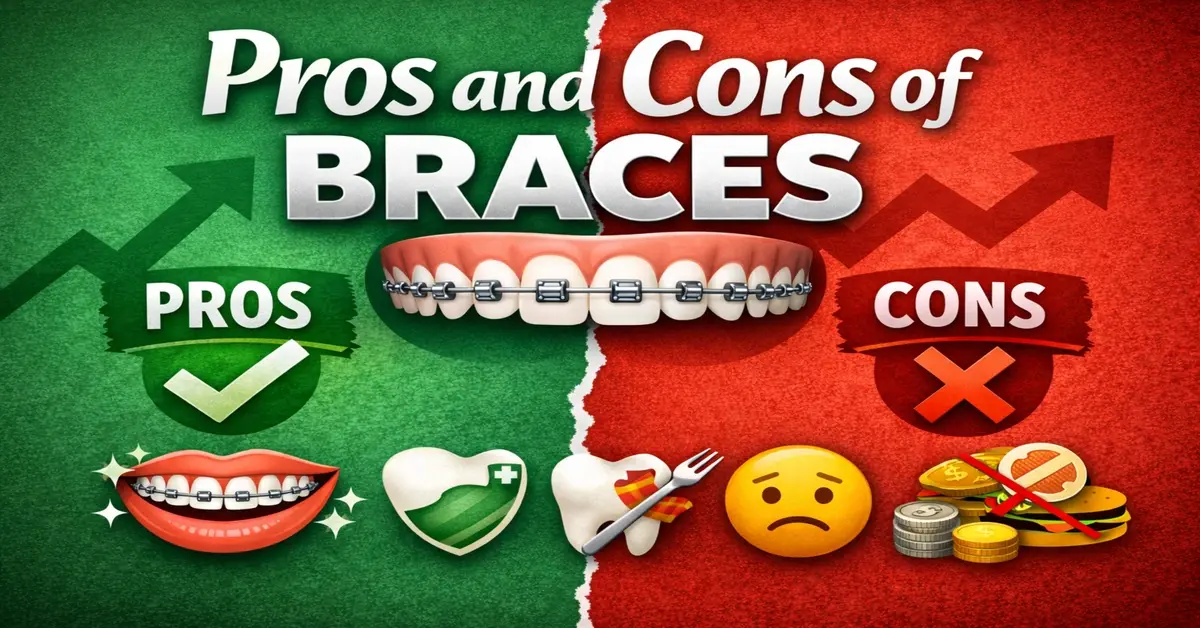
Pros and Cons of Braces at a Glance
| Area | Benefits | Drawbacks |
|---|---|---|
| Effectiveness | Excellent for complex cases | Requires time and patience |
| Appearance | Straighter smile over time | Brackets may be visible |
| Comfort | Predictable progress | Short-term soreness |
| Oral health | Improved bite alignment | Harder cleaning during treatment |
| Lifestyle | No daily compliance needed | Food restrictions |
| Cost | Often cost-effective long term | Upfront expense varies |
This table gives a quick overview. However, each point deserves deeper explanation.
Advantages of Braces
Oral Health Benefits
One major advantage is improved function. When teeth align properly, cleaning becomes easier after treatment, and bite pressure distributes more evenly.
Key health-related benefits include:
-
Better bite alignment, which may reduce uneven tooth wear
-
Fewer hard-to-clean areas once treatment ends
-
Lower risk of gum irritation caused by severe crowding
In addition, proper alignment can support clearer speech in some cases.
Cosmetic and Confidence Improvements
Many people choose braces for appearance, and that’s valid. Straighter teeth often lead to improved self-confidence and comfort in social or professional settings.
Common cosmetic benefits include:
-
A more balanced, symmetrical smile
-
Reduced self-consciousness when speaking or smiling
-
Improved facial harmony over time
For adults, this confidence boost can feel especially meaningful.
Long-Term Value
Although treatment takes time, results can last for decades when retainers are worn as advised.
Long-term advantages include:
-
Stable results with proper retention
-
Fewer future dental complications related to misalignment
-
Strong effectiveness for cases that aligners may not fully correct
As a result, many patients see braces as a long-term investment in oral health.
Disadvantages to Consider Honestly
Pain and Discomfort
Braces do cause discomfort, especially at the start. However, pain is usually temporary and manageable.
What most patients experience:
-
Soreness during the first few days
-
Pressure after adjustments
-
Occasional cheek or lip irritation
Helpful strategies include orthodontic wax, soft foods, and short-term pain relief if recommended.
Daily Lifestyle Adjustments
Living with braces requires habit changes.
Food restrictions
To protect brackets and wires, you should avoid:
-
Sticky candy and chewing gum
-
Hard foods like ice or nuts
-
Crunchy items unless cut into small pieces
Oral hygiene challenges
Cleaning takes longer because plaque can build around brackets.
Helpful tools include:
-
Interdental brushes
-
Water flossers
-
Floss threaders
-
Fluoride toothpaste or rinse (as advised)
Without good hygiene, risks such as white spots or gum inflammation increase.
Cost and Time Commitment
Treatment usually lasts 1–3 years, depending on case complexity. Adults sometimes need longer treatment than teens.
Cost depends on:
-
Type of braces
-
Severity of alignment issues
-
Location and provider
-
Whether retainers and follow-ups are included
Many clinics offer monthly payment plans, which helps manage costs.
Adults vs Teens: Key Differences
Braces work at almost any age if gums and bone are healthy. Still, there are differences.
Adults
-
Treatment may take slightly longer
-
Existing dental work may affect planning
-
Insurance coverage is often limited
-
Appearance concerns are more common
Teens
-
Teeth often move faster
-
Parents help manage care routines
-
Social concerns differ
Despite differences, adults can achieve excellent results with consistent care.
Braces vs Clear Aligners
Many patients compare braces with clear aligners.
When braces may be better
Braces often work best for:
-
Severe crowding
-
Significant bite problems
-
Rotated teeth needing precise control
-
Patients who prefer a fixed option
When aligners may suit better
Aligners may be helpful if:
-
The case is mild to moderate
-
Discretion is a top priority
-
The patient can wear trays consistently
Because braces stay in place, they remove the risk of forgetting to wear them.
Who Is a Good Candidate for Braces?
Braces may be ideal if you:
-
Have crowded or misaligned teeth
-
Need bite correction
-
Experienced relapse after past treatment
-
Prefer predictable, fixed treatment
Braces may not be suitable if:
-
Gum disease is untreated
-
Hygiene commitment is poor
-
A removable option better fits your lifestyle
An orthodontist consultation is the best way to confirm suitability.